
Inside the Creative Process: Daniel Hancock on Storytelling Across Audio Drama, Theatre, Comics, Film, and Animation
Craig Hart:
Welcome to Audio Drama Insiders, the podcast giving you the lowdown on the most prolific and talented creators in the industry. And now, here are your hosts, Craig Hart and Trisha Rose. Now, welcome back to another episode of Audio Drama Insiders. I'm your host, Craig Hart, here with my indefatigable cohost, Trisha Rose. I actually don't know what that means. I just wanted to see if I could pronounce it. So, hello there, Trisha. How are you doing?
Trisha Rose:
I'm doing well. At least I think I was until you called me fat. Did you just call me fat? I'm pretty sure you guys didn't call me fat. Did I? I take great umbrage at that. Umbridge.
Craig Hart:
Now you have to have the umbrage.
Trisha Rose:
We have a special guest today, Daniel Hancock. We've been meaning to have him on for quite a while, and he got caught in, shall we say, hiatus again of Audio Drama Insiders. So, he was really patient and was willing to come back and help us out. But Daniel Hancock is a multi-talented creator. With a passion for storytelling across various formats, Daniel has made contributions to the worlds of comics, audio drama, and more. Recently, Daniel has expanded into film production, directed a true crime featurette, and relocated to Florida to work at an animation studio. Daniel creates original content and offers creative services emphasizing storytelling that is entertaining, educational, and enlightening. Daniel, thanks for joining us.
Daniel Hancock:
Man, that sounds good with all that stuff. Look at you, Craig.
Craig Hart:
Right? You can use that. That's free.
Daniel Hancock:
Thanks for that. I really appreciate it. It's good to be here. Thanks.
Craig Hart:
Absolutely. So I wanted to ask you initially. I mean, this show typically is about audio drama. So let's start off with that even though you do a lot of other things that we'll get to. But tell us a little bit about End of Darkness. What inspired you to make it? Some of the process that went behind it. Because I was just looking at some of the production shots you did, and it really looked in-depth, you guys. There's a lot of attention to detail. So take us through that, maybe from the beginning of the inspiration into how you got it finished and got it out there to the waiting public.
Daniel Hancock:
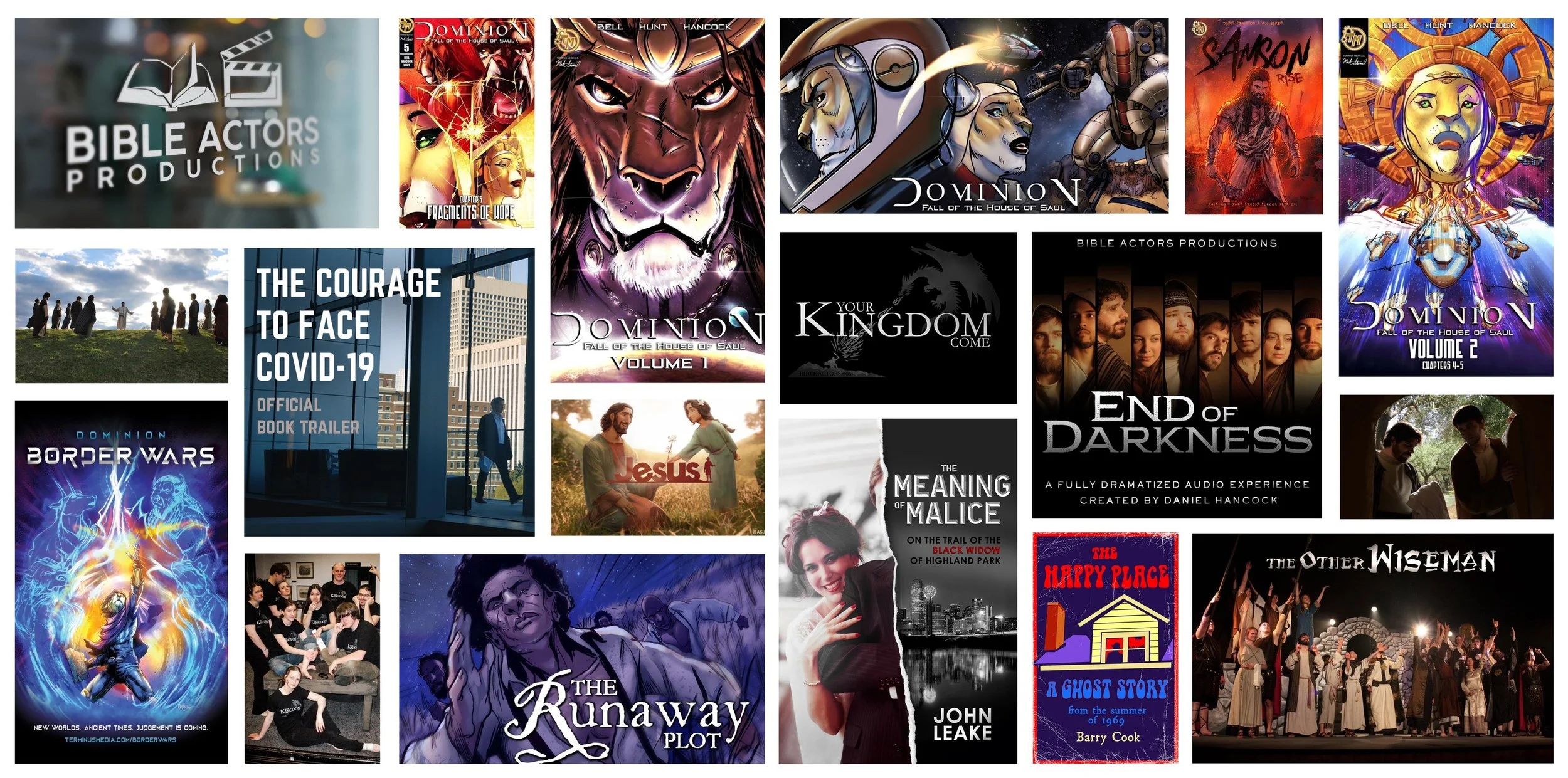
Awesome. Yeah. End of Darkness is a great project and really a long, long time in the making and planning. Originally, it was written as a stage production, so that kind of goes back to Bible Actors Productions, which was a theater production team. I actually started that group when I was 14 and we kind of continued to grow from there and got bigger and bigger and kind of culminated in that End of Darkness audio drama as everybody got married and had babies, and we couldn't tour the state like a vagabond group anymore. And so we decided to settle down into adulthood and do an audio production. And, and so that's how that kind of translated from stage, which was a very, very ambitious stage production as it was. Just a huge cast bigger than we had attempted before. So we never did stage that play, but it was exciting to try to work out that story and get it together. An audio drama was a good fit for that because with the large cast, we could have people come in for a much smaller commitment than months of rehearsals and touring and doing everything to do a project like this. So there's actually 50 voice actors that performed in there. Yeah. A lot of them are smaller parts, you know, but a good amount of them are throughout the entire thing. And so that's a lot of voices to juggle, a lot of talent to, to just to audition and cast was a big deal to try to figure out how to have everybody. But and we didn't even have, you know, obviously all the things that Jesus did and everything. But it's the story of the gospel, you know, and kind of a unique perspective as far as the scripting goes. You know, we took a nonlinear approach to the storytelling, kind of brought some focus to some of the characters that you don't always get to hear from and see. Put them, put us in the shoes of those characters and let us kind of experience the gospel story through that. And then, like you mentioned, we had we did some photography work. We did a bunch of still—I think we did something like 40 still photos that go along and correlate with the audio.
Craig Hart:
Those looked great, by the way.
Daniel Hancock:
Yeah. Very cool. And it really, one of the reasons why we were thinking to do that, it was just experimental. All of this was experimental. We had never produced an audio drama before. So this was a theater troupe, all volunteers, nobody was—everybody was doing this on a ministry basis, you know. So, it is, you know, a great project for that reason as well just because the people who are a part of it were very committed, very dedicated to the work that we were doing, to the message. And you can feel the, you know, you can feel the love and the commitment in that, in the performances and in the, you know, in the end product there. And then brought in, musicians to create original score and we did a fully cinematic style sound design, huge dynamic range, which causes all kinds of problems for mixing and mastering.
Craig Hart:
And, retailers have a problem with that sometimes.
Daniel Hancock:
But yeah, it turns out to be quite the project. It's a great rendition of the gospel stories. It is powerful. I think it's got some great moments with characters in there. And another great thing too with it, as we moved it from the stage script to the original, one to the audio drama, we expanded it. So it's 3 and a half hours long. So it's like binge watching a Netflix series or something like that when you go through it. And even then we didn't cover everything. We didn't cover all of the gospel beats and every single miracle and all the things that happened. But, but a lot of them. A lot more than would be covered in a typical film, for instance, which has to hit, you know, you know, an hour and a half, 2 hours, you know, and then that's pretty much what we usually get is kind of a very truncated, presentation of the gospel story. And so with audio drama, we said, why not? You know, long form audio is coming back into style again. We said, let's expand this out. Let's expand this out. Let's do more of it. And so a couple of the things was we, we did include more of the scenes, more of the beats of the, of the gospel narrative, but also a lot of the teachings of Jesus are included in the audio kind of uncut. You know, where instead of, you know, you get three lines from the Beatitudes and then it fades to the next scene, you know, or what you have to do with a movie, you know, you kind of can't—you can't expect people to watch an entire sermon, you know, in a movie theater. It gets a little bit challenging to do that. I believe, you know, shows like The Chosen TV shows and and things are starting now to be able to do that over a television. It's a little easier to spread it out.
But normally, a lot of the previously the gospel stories couldn't really incorporate all those things that Jesus said, but we did in this. So I would say we didn't include every word that he spoke to everybody, like, so every interchange with the Pharisees or things like that. They're not all included, but all of the general teachings of Jesus are included. So if you listen to End of Darkness, you basically heard the things that he taught, you know, which is good. I like it for my kids, you know, because they can pop it on and listen to it and, you know, you kind of—it’s kind of rare that we do that, you know, like, listen to the entire thing that he said, but the whole thought, you know. And so there's a lot of that in there as well. So and then, of course, it gets really dramatic and cinematic, you know, in the style that we do, the crucifixion, resurrection, and all that too. So it's a lot of fun.
Craig Hart:
Well, that’s really fascinating. Thank you so much for sharing that insight. As, again, as I was listening to it and as somebody who has, you know, produced some audio dramas, the amount of work is stunning. Like, I don't know that I think when you see a movie, you get, like, an easier sense of the amount of work, and certainly audio dramas can be produced with a lower budget and whatnot. But they still are very technical, and they take a lot of work. The detail that goes into them is pretty incredible.
But your work is not just audio dramas. And I should say, by the way, that I asked Daniel if he was going to produce any more audio dramas. He said, maybe. So maybe if everybody who listens to this hassles him enough, he will grace us with another one.
Daniel Hancock:
Well, I did get to work on another one recently, actually.
Craig Hart:
Yeah? Tell us about The Happy Place.
Daniel Hancock:
Yeah, The Happy Place. That’s another audio drama. So, I—you know, End of Darkness broke me. No, I’m kidding.
Craig Hart:
Well, you started out big. You started out…
Daniel Hancock:
Yeah. It’s one of those ridiculous bit off more than you can chew crazy stupid things that we did. Right? It’s like, why don’t you try our hand at audio drama? 3 and a half hours, 50 voices, original score. It’s like, you know, we didn’t even know what we were doing. So we found our way through it, you know, but it took a long time. A long road of doing it. And a lot of it was me. My name’s on the credits too many times, it’s embarrassing. But, the point is, it can be done, but it’s just an enormous commitment of time. Really, and talent as well, but time—really a lot of time to produce something like that.
So thankfully, I wasn’t anticipating doing more audio drama right off the bat. But almost immediately upon finishing it, it got around, and I was hired by a veteran director, Barry Cook, who is the director of Disney’s Mulan, Roger Rabbit, and stuff. He did, you know, a bunch of—he worked on Tron all the way back, you know, he’s like the old school awesome days of Disney. He was the guy. Aladdin, Beauty and the Beast, those ones. You know? And so, awesome guy. He’s become a great friend of mine. I actually just got off a call with him before this meeting, because we just—minutes ago—published his new book, The Gumdrop Ghost. It’s a children’s book, where a ghost gets stuck in a kid’s gumdrop on Halloween. Hilarious. Tiny little ghost, and he’s stuck in there, and they’re trying to figure out how to get him out. So we’ve had fun together. We’ve done a lot of projects now. And, but this one that he had, at the time, he had heard End of Darkness and was looking for someone to help him complete an audio drama that he had written during COVID.
And so I came alongside of him, and The Happy Place is not as family-friendly or faith-based as End of Darkness, but it still has kind of undercurrents of faith in those tones, but it’s more grown-up. And, it’s about a hippie on his way to Woodstock who gets murdered by an angry Vietnam vet for talking to his wife, and then he turns into a ghost. And you’ve got a whole, like, kind of hijinks comedy that goes on from there, you know, as he tries to haunt the guy into confessing. Yeah. No. It’s got a classic rock kind of soundtrack going on. We had a great time, and I did the sound design primarily and did a lot of editing and planning and stuff with that. There’s a novelization of it as well. It’s a little novella that was on Amazon as well. So those are both fun to check out, and The Gumdrop Ghost. You know? Cool. But that was my other little entrance into audio drama.
Craig Hart:
That’s awesome.
Tricia Rose:
So your work spans comics, audio dramas, and now film and animation. How do these different media forms complement each other in storytelling?
Daniel Hancock:
Yeah. I mean, each medium has its own strengths, I think. You know, with stage—and I know I’ve talked about this before, but, you know, stage and theater work, but then novelization and film all kind of have their own distinct focus. With film, it’s very visual. Stage tends to—funny enough—be kind of auditory. It’s all about the dialogue, that back-and-forth between characters, kind of Shakespearean influence there. And then novels are all inside the characters' heads. It’s all about the prose and the descriptions and thought processes. It’s very different, more than we might think. It’s not just a difference of the medium itself, you know, it’s a book versus a play versus a movie, but rather the whole approach to the storytelling changes. You’re thinking visually, you’re thinking conversationally, you know, conflict, interpersonal, in the theater space and then internal. A lot of times, novels do a great job of internal conflict. Sometimes that’s why they struggle to adapt novels to film, for instance, because they’re all about the internal conflict in the person’s journey, and they’re like, how do we make that into a visual blockbuster? And sometimes it works, and sometimes it doesn’t. It takes a bit of craft, you know, to be able to do that. And it takes a bit of creativity. You’ve got to get clever with how you’re going to move that into that other medium.
So audio drama and comics are kind of fun for me because they’re these hybrid mediums where you’ve got—in audio drama—you have both the audio, the auditory conversational kind of nature of theater, but then the more cinematic effects of music and sound effects and the other things that come from, usually traditionally, film. So you’re able to bring some of that in. So for me, that was great because I love that part of the filmmaking process of being able to do music and create interesting emotion through those things.
And so with writing novels, which I’ve never really gotten into writing novels, I edit. I’ve edited novels and I help with that, but I haven’t written novels because of that, I think. I’d feel like it strips away too much of my need for emotional lifelines of music and sound to be able to do that in visuals. You know? But yeah, audio dramas like that, and comics are interesting too in the same way because they’re kind of a hybrid. Without the audio and the music and the things that you normally would use there, but yet it has the conversational aspects of theater or what you might see in audio drama, you know, where you have this kind of back-and-forth dialogue stuff going on. You know? And novels, where you can have the internal journey kind of being drawn out through a comic book story. But it’s very visual, you know? So it’s all about these—you can make anything in a comic book, which is what’s great about the ones that I’ve done. I do these science fiction series and kind of reimagining biblical stories, things like that. And that allows for a lot of room to be able to do it because there’s no budgetary difference between drawing a guy sitting at a diner and somebody blowing a ship up in space. You know? Like, there’s no difference in, you know, whereas with film, you know, there’s a huge disparity between these. But with a comic book panel, I can say, I want the guy to be, you know, trying to fix a weather vane on that barn, you know, or launching off of a planet, or, you know, ripping the jaw of a lion open, or, you know, like whatever thing we want it to be, we can make it. So it’s a beautiful medium for me because there’s just no restrictions. It’s write what you want to write, and it’s really immediate too. With the turnaround, I can write something and within a few days, working with the art team, and there it is. It exists. You know, the visual crazy thing that I come up with is there on the page.
So the immediacy of that is great. In that way, I actually find comic books to be tied to theater as well because with film, you’ve got this long road of you putting all these pieces together. It’s very, very collaborative. There are a lot of moving parts, a lot of personnel, you know, that are doing different aspects of something like that. And then you don’t really see the end product for years, you know, before it finally comes out, you know, and so many hands have touched it and it’s very different, you know, by the time you see it. With theater, you have that kind of immediate reward of the audience reaction. You get to go out there every night. We had a great time with our theater troupe on those types of things. It’s a great kind of kinetic energy that happens when you’re performing a play. And comics have been that way for me too because of the turnaround speed and our ability to produce things quickly. It happens to, like, to be a similar feeling. You know, you get that immediate response of, hey, check this out, you know, we already got it done. But yeah, audio drama, film—they take a little longer and, you know, you’re kind of doing it in booths and in little side groups, and you shot that, then you weren’t there the day that we did that. And, you know, and then it kind of all has to slowly come together. But, so just different things, different strengths. But the one thing that stays true is they’re all storytelling. You know, you’re trying to tell a story. You’re trying to elicit emotion, communicate experiences through any one of these mediums. But it does take a little bit to learn the conventions of that medium, you know, the expectations of the consumer who’s going to be receiving that. Theater audiences are not the same as film audiences. Comic books and audio dramas are very different crowds, you know, and they have different expectations, you know, what they’re going to see with that and different storytelling language.
Craig Hart:
I see where you’re coming from! And it’s cool how you’re able to find that balance across all these mediums. But that leads me to something I’ve been curious about—what is it about story itself that keeps people coming back, regardless of the medium?
Daniel Hancock:
Going deep, going home.
Craig Hart:
That wasn’t even on my list of questions either.
Daniel Hancock:
Well, it all goes back to my childhood, really. No, I’m kidding.
Craig Hart:
Haha!
Daniel Hancock:
No, I think it’s inherent in all of us that, you know, we think in stories. We dream in stories. I think that our lives are stories, you know, and that we’re on a journey of sorts. Each person is kind of on their own journey. And so, in a lot of ways, these stories that we tell, whatever medium they end up coming through, help us to think about where we’re at in our own journey, to face things and to contemplate things that we might not have come across. Maybe we never will, or maybe we will in the future, you know? And so reading good stories, watching great movies, listening to awesome audio dramas, reading comic books can kind of prepare us, you know, in advance to be able to think through issues and ask ourselves big questions that we wouldn’t necessarily have done. It definitely enriches your life to do so.
I told my niece this a while ago—we were talking, and I said, you can extend your life. You can live multiple lifetimes inside of one life. If you could do that, would you do that? Would you live life a hundred times over from a hundred different perspectives? That’s what storytelling does for us. Right? We go, we sit down, we read a book, even if it’s like a nonfiction book, like a biography or something like this. I’m working on the Frederick Douglass material right now, we haven’t talked about that yet, but…great one. Hero Autobiographies. It’s this thick. You know? And that story, I sit down, I read that book. How long does it take me to read that? Maybe a couple of weeks, if I’m slow. Right? But I just went through the guy’s life. I just lived an entire life of another person in two weeks, you know? And so I’ve extended my life, and I’ve done that many times over as I’ve read books, as I’ve watched movies, listened to things.
So it’s immensely powerful because you’re learning all the wisdom, all the mistakes of those people, all of the challenges that they’ve overcome, and it can be extremely rewarding and strengthening to your own life. So I think that’s part of the reason why. But then, of course, there’s the entertainment value too. Like, you know, we want to be thrilled. We want to, you know, have fun. We want to go on adventures, go to places we’ve never been before. And so it’s like, yeah, you go to—you go to Italy or Spain or, you know, Australia, you know, all from the quiet of your home. Right?
Craig Hart:
Right?
Daniel Hancock:
Middle earth, you know, wherever you need to go! Or you can go to planet Gibea you know, and experience it and be just enraptured by a new story, a new place, an imagination. And, speaking of imagination, I think C.S. Lewis talked about, I think it was maybe Tolkien or Lewis—or maybe the two of them at the table together—talking about the baptism of the imagination. You know, I think it was Lewis, he said, that reading fantasy stories baptized his imagination and the rest of them took a little longer. Yeah. And so a lot of what I've been trying to do with my books and stories, and work, is to—even through the gospel story, the End of Darkness audio drama, in the way that it's being presented—is to baptize the imagination, is to bring that out, that ignite that fire in your chest, that thing that makes you go, you know, wow, rises up in you and you go, you're looking for something greater, something bigger. And that can be done through the storytelling itself. Not just with inspirational stories or spiritual content, but with just storytelling itself. It can elevate your thinking. It can elevate you to a place of being able to contemplate things in a deeper way and be fun at the same time. You know, that’s the challenge—to try to do both.
Craig Hart:
Going back to something else you were talking about, you know, for example, you can only have so many verbs when you're paid for a comic. Do you find those kinds of constraints on creativity freeing, or do you find them confining?
Daniel Hancock:
I would say the more confined the sandbox, the better the sand castle you'll make. Yeah. Right? So, you know, like, that’s the way I like to think of it. The tools that you have to tell your story with being limited have produced some of the greatest stories in history. Right? And so we—and definitely in my own work—that has been the case. It forces innovation, it forces creativity to happen. For instance, you know, you mentioned the verbs on a page with the comics—definitely that's a constriction. How much space you have, how much I call it real estate you have on a page, forces you to make sure that the things that you are putting on the page deserve to be there. You know, if I had unlimited pages, I might have a very fat and unappealing story by the time I got done. Right? But knowing that I have 100 pages to tell a story, right, and I have to fit all of this in there, it means that I cut the things that don’t need to be. The things that are not necessary. So that's great.
Audio drama is another one where the, where sometimes those things are—the seeming constraints—are actually freeing. For instance, with film, you have complete control over the visuals of what the audience sees. So if I want them to see—I was just talking about my Frederick Douglass short film that we're working on called The Runaway Plot. And I took a napkin here, and I said, you know, this is how I want the cotton to be, and I want the hand to come in and they take it like this, you know. And when I do that and I say, there's nothing in the background, it's all depth of field, you know, you can’t see that. And so I'm talking to the animation director here about this. This is how that shot’s gonna be set up. What are the audience going to be seeing when they do that? Exactly and only what I want them to be looking at. There's nothing else to do with that—that is, I'm controlling that. But the interesting thing is that that’s a constraint. They can't see everything. They cannot see everything. So it can be both, at the same time, freeing because I have control, but then constraining because you can’t really capture everything all at once.
Whereas with theater, you're in the theater and you don’t have that kind of control to be able to say, "You have to look here." You have to do it creatively. You have to say, "How do I force them to pay attention to the character that I want with lighting, blocking, with expression, with dialogue that forces them to look at the person that’s key in this scene?" Right? How do you do that? So there's constraints on that side.
With audio drama, though, there's a kind of freeing element which I like, which you guys will probably appreciate. But it’s that the audience gets to decide what they’re seeing. And so while I get to guide it and direct it—and I definitely do that with the spacing of sound design and music and other things like that to inspire it—the perspective, the blocking of a shot, for instance, like when I want Jesus and the thieves to be talking on the crosses, I can mix and master that a certain way so that you feel the spatial blocking that I want you to. I want this to be a wide shot. Oh, but now we’re zooming in on this guy. Right? Like, And so you're guiding the camera in the audience's mind to do this, but each person has experienced End of Darkness differently. They’ve all blocked it in their own minds. They’ve all put those images together.
Somebody actually wrote in and said that they felt like listening to that audio drama was like watching an M. Night Shyamalan movie where you can’t see the monster and you never see it.
Craig Hart:
Oh, wow! Yeah. I like that.
Daniel Hancock:
Yeah. You know, you never see the monster, and so it’s more terrifying in your mind because you couldn’t ever get a good look at it. Right? And so they said that the crucifixion sequence was beyond what anybody could have done on a film set because of the imagination of the viewer. They’re taking it and your mind is running with it. It creates a better movie than you could ever make and, you know, and isolate into one shot. You know? So, it’s interesting how that works. Because, yes, everybody kind of has their own movie playing. So it’s both restricting—you don’t have any visuals to work with—you cannot, you know, you don’t have that luxury of being able to say, "I want them to see this. I want to show that." You have to find a way to do it. But if you can, it actually is a beautiful thing because they can piece that together for themselves as they listen, and it really becomes personal and experiential at that point.
Craig Hart:
I think that's why, you know, I've talked to some people about audio drama, how it can feel so visceral to a person. Mhmm. Because, as you said, it sort of attaches itself to—if, say, it’s a horror story—it attaches itself to their specific fears because everybody has different fears. Right? It’s all that unknown. It taps into this for each person. It’s so personal, and it’s going right into your ears, and it’s like, you know, it can be as exciting and terrifying and freeing. And it’s a great medium.
I want to talk about collaborative efforts because I see this happening more, and I think it’s generally a good thing. With indie producers getting together, and with the rise of technology now, people with lower budgets can do more things, and I think that’s amazing. You’ve clearly got experience in collaborative efforts. What do you think are some of the keys to doing that successfully?
Daniel Hancock:
Well, I think each project is different. Each collaboration and relationship is different. It really just depends on what you need, but I think the main key is to do what my friend, Jason Kipper, always says: put the aces in their places. You know, and finding the right people for the right jobs. If you can get that, even a very small team is actually my preference. I like to work with a very tight, smaller team with really, really focused and talented people who know what they're doing in that area. And I've tried my best in my—especially in my theater days—working with very large groups, you know, sometimes 50 or more people working on a project. End of Darkness, actually, with all the musicians and all the extras in the background, we had over 150 people that volunteered on it to work on the project. So there’s that, but then the theater productions would often have 40 or so, maybe 50 people working on a given thing, and being able to delegate the right tasks to the right person, to say, I had, thankfully, found an amazing team of people where I would not have to worry about the aspects that they were in charge of. You know? And so definitely, I would say that's the primary thing: really finding people who you click with, and coming together on the vision.
Having a clear vision is probably the other major factor, and that’s the—you know—the primary role of a director is to be able to present that vision, to cast a clear image in the mind of the team of what we’re trying to attain. And once you get those talented people in the right places on the team, and you can create that vision and make sure that everybody is kind of pulling in the right direction, that’s where it really starts to sing, and everybody will bring their own strengths and giftings to that process.
Craig Hart:
Yeah, I heard somebody say one time that, you think they were talking specifically about leading collaborative efforts, it’s like—one of the keys is, as you were saying, find the right people for the positions and then get the heck out of their way.
Daniel Hancock:
Yeah. Exactly.
Craig Hart:
He didn’t say heck. But, like, you get the point.
Daniel Hancock:
Yeah. No. Definitely, I agree with that. And, you know, one of the other things is I try to give as much authority to the people who worked under me in those roles as possible. You know? So, I would say if it's a problem that you can fix, then fix it. You know? Like, you don’t need me to be involved unless I need to be. And if you do have to come to me with something, I always say, come with your plan, you know, the solution to the problem, and we'll talk about that, you know, rather than coming to the table with problems.
So as a person who, you know, I’ve worked in every imaginable role in the hierarchy of projects. And currently, right now, I’m working at an animation studio here in Florida. So in that position, I came into a major movie production, a huge feature animated film, and stepped in on a more production management role doing things that were, you know, not director, producer, writer-type stuff that I normally do. And so being able to be that person, that’s helping, you know, just bringing your talents and giftings in that role, solving the problems, bringing those solutions to the table. That’s what I always encourage everybody to do is try your best to understand the vision, the goal of the project, and then solve as many possible problems as you can, you know, before they become a problem. You know, get ahead of it. Get ahead of it..
Craig Hart:
Absolutely. Last question. What’s next for you and Terminus Media? Any exciting projects on the horizon that you can share with us?
Daniel Hancock:
So right now, Terminus Media has the Dominion: Fall of the House of Saul series, but we've also got other projects as well. One of those that's about to come out is my spin-off of the Dominion series called Border Wars, and that is about young David being trained in secret by the exiled high priest Samuel. And he gets quantum-leaped into the book of Judges where he gets mentored by Samson and Gideon and Joshua, and trained, and learns all the ways of the force to be able to go back and fight Goliath and Saul and everything else. So it’s a great series. Very cool. Never been done before. Nobody’s ever even attempted to do what we're talking about here. And a lot of room for awesome stuff.
My primary collaborator on that project is Matt Baker, who’s a brilliant artist. He’s an animator, a former Disney employee. He’s worked at all kinds of—he's a fine art painter. Like, brilliant artist. And so his work on that, if you want to go and check it out, you know, all these projects can be found on my website, danielhancock.com. You can find them all. It has all of these that I’m talking about, but you can see the visuals for Dominion and Border Wars that are coming out. But we've also, together with Matt Baker and Daryl Pennington, worked on another comic called Samson: Rise. So that's a kind of reimagining of the Samson story. That's more directly done, but more of a superhero stylization to it. So that’s a cool one.
But recently, we've been working with the Frederick Douglass Leadership Institute on a series of comic books on his life from the autobiographies. And the first one of those that we put out last year, is called The Runaway Plot. It’s a short comic, and it’s been used kind of as a community outreach tool. They've been giving these books away. But they printed like 35,000 copies of it. It’s all over the place now. They’re really using it a lot. Got popular, and now it’s been gaining interest as a short film. So I’m now working with Premise Entertainment here in Florida. And so between Terminus Media and the Douglass Leadership Institute, Premise Entertainment, and my friends over at Brainy Pixel Studios, we’re all kind of converging here to bring that comic book into the animation space.
So that's one of my projects that’s happening right now, we’re working on everything’s kind of going. But we have original music for that. We have a hymn as my friend, who’s an incredible songwriter, Elizabeth Thomas, is working on a song for me for that. We have a men’s acapella group that will be performing it. But with that animation, funny enough, I've come back around to voice acting, of course. You know, audio drama and animation have a lot in common. There’s some crossover in that space too. So, you know, unlike film, you end up in a booth, you know, recording very much like you would for an audio drama. The performances tend to be a little bit stronger like you would do for an audio drama, you know, the animated readings.
But yeah, it’s gonna be quite incredible. The book itself is great and, you can check that out on the site as well. The animation that we’re looking at, the stylization of it, the power behind the story, it’s gonna be unlike anything that's been done before on that topic. So, yeah, pretty excited about that. And then lots of other things too. It’s kind of the nature of being a producer-director as you kind of always have a lot of projects at various stages. You know? It’s kind of a “sticks in the fire” kind of thing. They’re all getting shorter, slower, you know, at different rates. But, yeah, I’ve got a whole bunch of other things too. I’m doing a lot of publishing through Premise Entertainment. So we've got children’s books, kind of like the Gumdrop Ghost one, but that’s with director Dom Carolla. And so he and I are co-producing the short film that I’m talking about, and he is the founder of Premise Entertainment here in Florida. An amazing veteran in the industry, animator, worked on every big movie you can think of doing all the awesome stuff that I grew up watching. So it’s kind of a dream job to work with these guys down here. But, yeah. A lot of talented people, a lot of talented artists. And the network just keeps growing and the opportunities just keep growing, you know, as more creative people join together to work on these types of things. As well as this, you know, you get to meet awesome people like yourself and hopefully, from this, this interview, you know, we’ll connect with even more people who are working on awesome projects and see what we can do together. You know?